

Joints, seams and paint
Say articulated joints, visible mould seams and airbrushed shading, and the result stops looking like a poster of a person. Those three details are what separate a figurine from a portrait with a plastic sheen on top.
Turn a description into a painted collectible figure. Free, no sign-up.
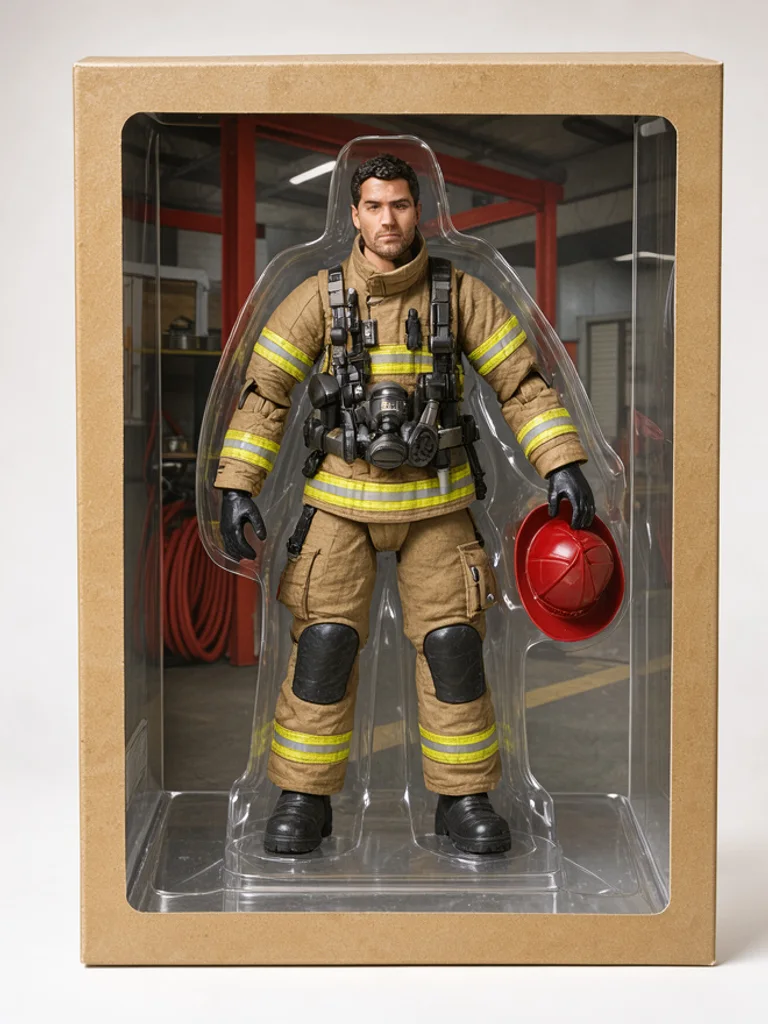
A painted figure standing inside a windowed box, with the plastic tray and the printed card behind it. This is the format collectors recognise, and it works as a gift mockup even when the product does not exist yet.
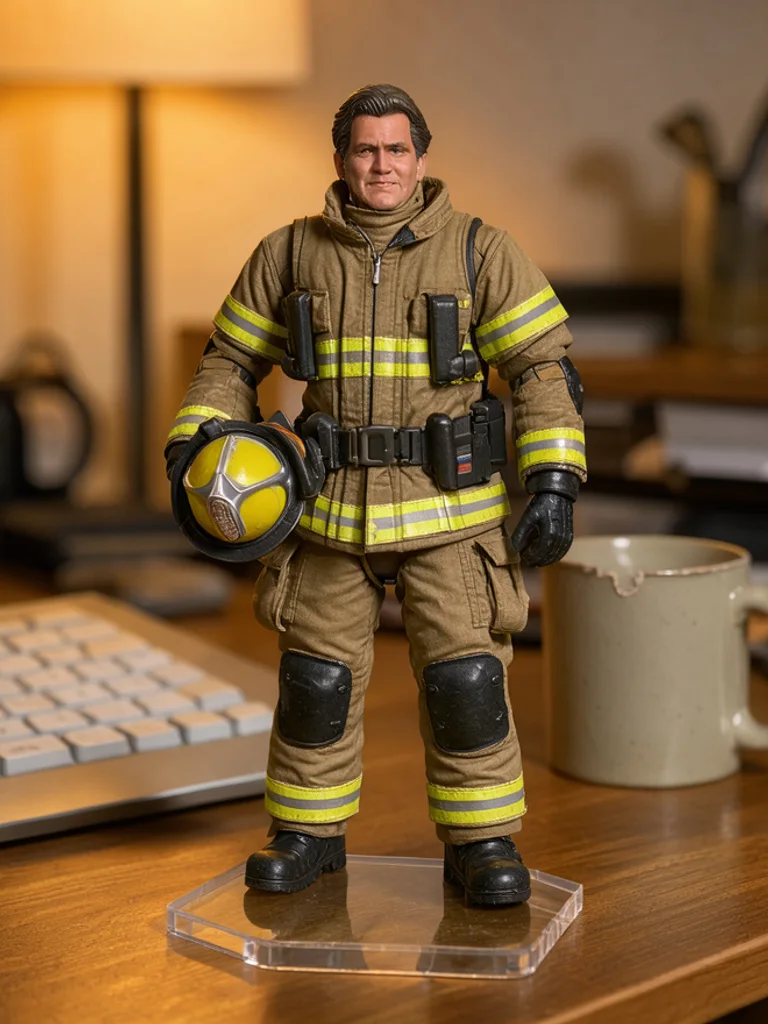
The figure stands on a real desk next to a keyboard, a mug or a stack of books, which gives it scale. Use it for social posts, unboxing mockups and anything that needs to look like a photo taken by an owner.
Seamless backdrop, controlled light, a clear acrylic base. It reads as an official product photo, which is what a store listing or a press kit needs, and it keeps the focus on the paint and the pose.
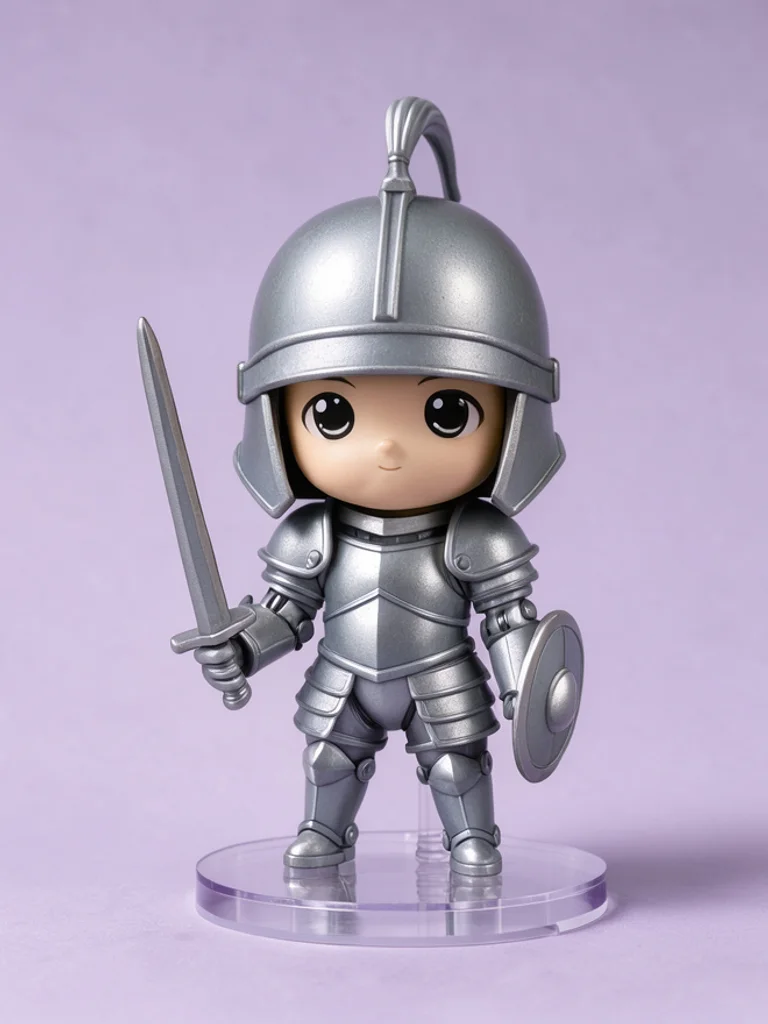
A short, round, big-headed version in the style of collectible mini figures. It is cheaper to imagine as a blind box or a keychain, and it works well when the character has to be recognisable at two inches tall.
Images powered by our free model
You describe a character the way you would describe a toy: what they wear, what they hold, how they stand. A firefighter in turnout gear holding a helmet, standing with feet apart. Pick a format, and the hidden instruction adds what a figure needs to look manufactured, such as a plastic sheen, a visible joint line, a base and a shadow that lands on the surface below.
If you have a photo, upload it as the reference and the figure follows that person instead of an invented one. The Free AI Action Figure Generator is used for birthday gifts, team mascots and prototype pitches, and the photo route is what makes the result recognisable: hair, glasses, a favourite jacket and the colours of a uniform all carry over.
The words that matter most are the scale and the setting. One seventh scale, twenty centimetres tall, standing on a desk beside a keyboard, tells the model both the proportions and the camera distance. Then name the material of the clothes, such as matte fabric or glossy PVC, because the paint finish is what separates a collector figure from a costume portrait.
The output is a still image around 1,000 pixels on the long side. It is not a printable model, not a 3D file, and it cannot be rotated, so you cannot use it to check the back of the figure. Any nameplate or packaging text has to be added afterwards in a design tool, since lettering comes out garbled.

Say articulated joints, visible mould seams and airbrushed shading, and the result stops looking like a poster of a person. Those three details are what separate a figurine from a portrait with a plastic sheen on top.
A helmet in one hand, a backpack, a surfboard, a small base with rubble on it. One prop gives the arms something to do and tells the buyer what the character is about before they read anything.
The same firefighter appears boxed, standing on a desk and shot against a seamless backdrop. Retail needs the box, social needs the desk, and a store listing needs the studio frame, and all three come from one description instead of three separate shoots.
Generating and downloading cost nothing, there is no sign-up, and the images carry no watermark. Try a few different ideas and keep the one you like without paying or logging in.

A friend, a coach or a colleague turned into a boxed figure makes a printed card or a framed print that costs a fraction of a custom sculpt. Generate the boxed version first, because it reads as a product rather than a picture.
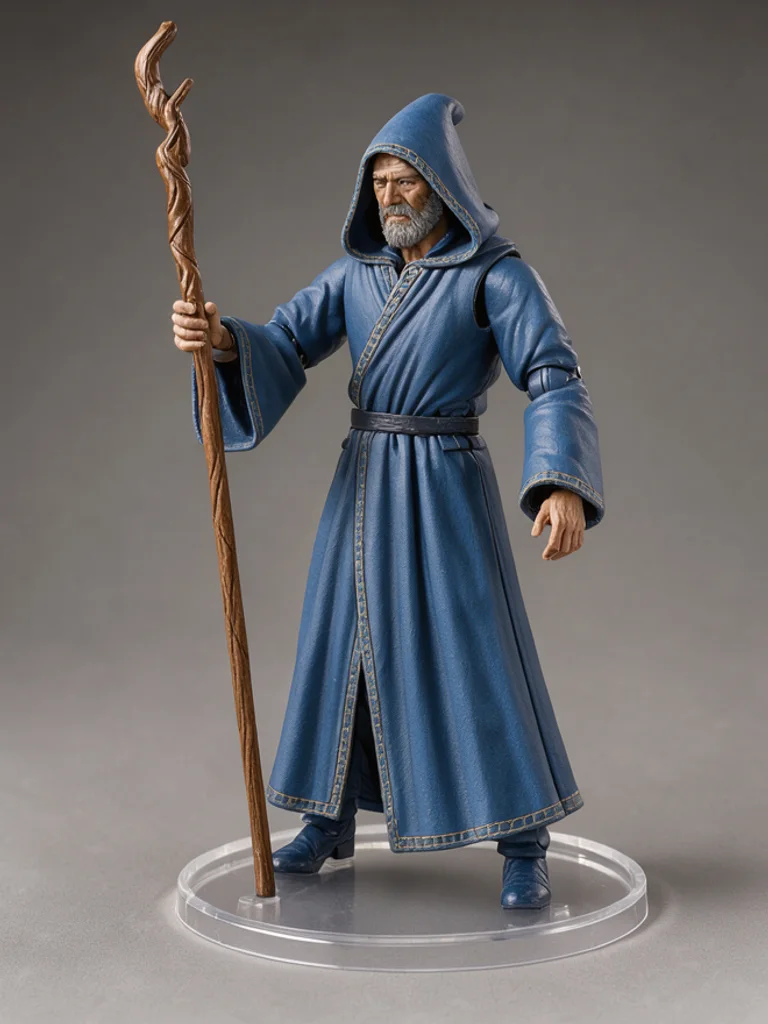
Three figures in the same box format look like a wave of releases. Keep the description structure identical and change only the character, so the paint style and the packaging read as one brand.
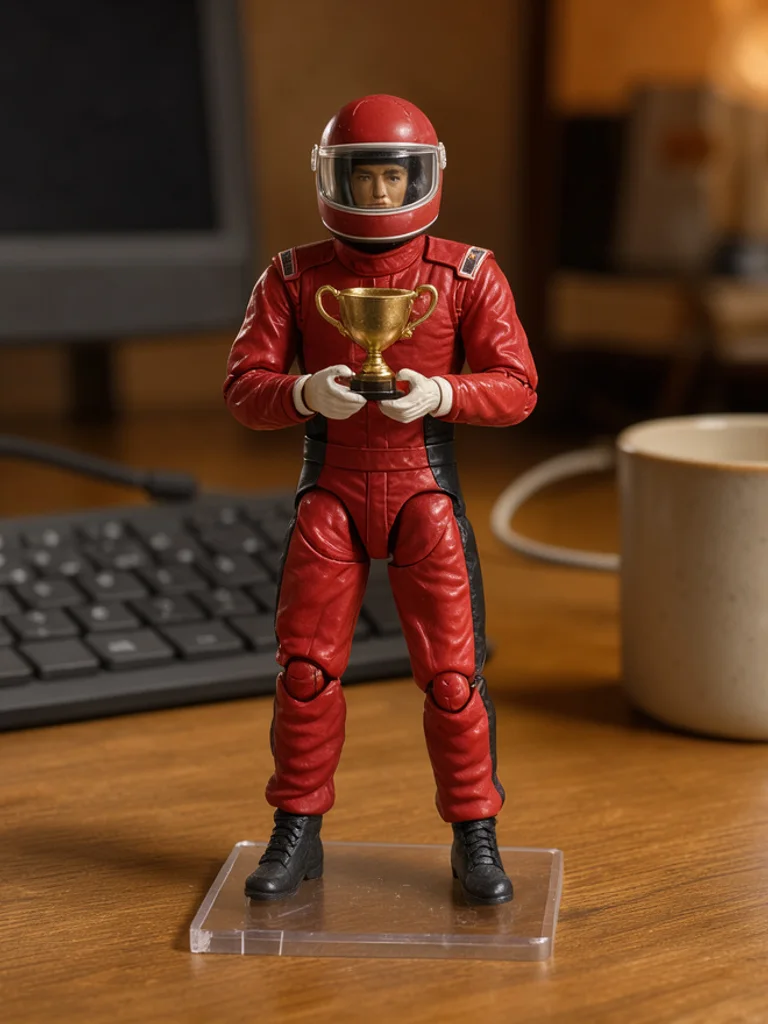
The desk format with a keyboard or a mug in frame gives the figure believable scale and looks like a photo an owner would post. It performs better than a studio shot in a feed, because the mess around it is familiar.

A small chibi figure of a mascot works on a badge, a keychain mockup or a sticker sheet. Generate it at the same proportions as the rest of the set, then reuse the file across merchandise ideas.
Create your first image in under a minute. No design skills, no sign-up.
STEP 1
Write what you want in plain words, the way you would tell a friend. Already have a picture? Click + or paste it with Ctrl+V, and the Free AI Action Figure Generator uses it as a reference.
STEP 2
Choose a style and aspect ratio if you like, then press Generate. Your free image is ready in a few seconds, with no account and no watermark.
STEP 3
Save the result with one click, or generate again with a tweak to the prompt. Downloads come without a watermark.
It is a tool that turns a photo or a written description into an image of a collectible figure, with painted plastic, joints and packaging. People use it for gifts, toy concepts and social content without sculpting or photographing a real prototype.
For most people starting out, yes, it is the best place to begin. Free AI Image gives you 4 ready-made styles, lets you start from your own photo or sketch, and hands you a clean download with no watermark and no account. That makes it the best value when you want to try an idea before paying for anything.
Yes. You can generate and download figure images without paying, without an account and without a watermark. You can try several formats for the same character before choosing one.
Yes. Buying credits adds a model menu to the workspace, where you can switch to a Pro model such as GPT Image 2 or Nano Banana Pro. They hold small props and packaging details better, and each image costs credits while the free model stays free.
Describe the outfit, the prop and the pose, then add the scale and the surface. A firefighter in turnout gear holding a helmet, one seventh scale, standing on a wooden desk covers it. Avoid brand names, because the model copies the whole costume rather than the idea.
No. You can describe the character in words and get a figure that does not resemble anyone in particular, which is the safer choice for a product concept. Upload a photo only when the figure has to look like a specific person, and only with their permission.
The dropdown offers Collector box, Desk display, Studio shot and Chibi figure, or describe another style in the prompt. Collector box suits gifts and retail mockups, Desk suits social posts, Studio suits store listings and Chibi suits small merchandise.
No. The result is a still image, not an STL or OBJ file, so it cannot be printed or rotated. Use it as a concept for a sculptor or as artwork for a listing, and commission the actual model separately if you need a physical figure.
Yes, the terms of service allow commercial use without attribution, including mockups and marketing images. Do not claim a real product exists, and avoid using a real person's likeness or a licensed character without permission.
Press Download under the result. Keep the description in a note, because the same character usually needs a second format later, and matching the wording is what keeps the paint style and proportions consistent.
 AI Wallpaper Generator
 AI Clay Art Generator
 AI 3D Render Generator
 AI Plush Toy Generator
 AI Anime Generator
 AI Avatar Generator