
Best Free AI Image Generator in 2026: 10 Tools Tested on Their Free Plans
”Free” means something different on every platform. Here’s what 10 AI image generators actually give you without paying a cent.
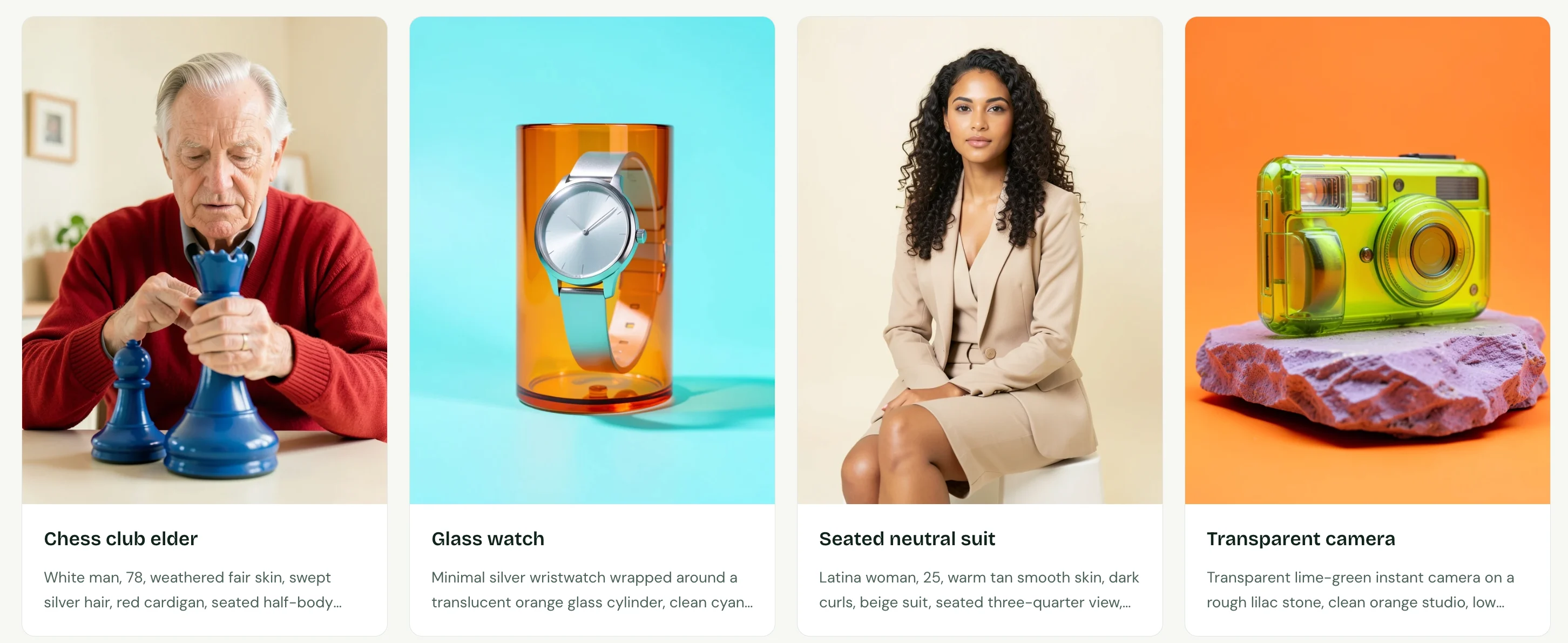
Image generated by Free AI Image
On some tools, free means a fresh batch of images every day. On others, it means 10 credits total, ever. Some stamp a watermark on everything. Some quietly post your images to a public gallery. And a few really are free, with no limits at all.
So I tested 10 AI image generators on their free plans only, with no credit card and no trial upgrades.
Here’s what each one actually gives you.
Quick answer:
- No account needed: Free AI Image, or Stable Diffusion on your own machine
- Most generous refill: Grok Imagine, about 10 images every two hours
- Stingiest free plan: Adobe Firefly, 10 credits once and never again
- Adds a watermark: Gemini, Bing, and Recraft
- Publishes your images publicly: Ideogram, Recraft, and Leonardo
- Not licensed for commercial use: Recraft and Leonardo
How I Tested
I checked the same four things on every tool:
- Free limit: whether it refills, and on what schedule
- Watermark: whether the free plan adds one, and how visible it is
- Privacy and rights: whether free images are public, and whether you can use them commercially
- Getting started: whether you need an account, and how many steps it takes to reach your first image
I checked every limit in September 2026. Free plans change often, so I’ll keep this list updated.
Disclosure: Free AI Image is our own tool. It went through exactly the same tests as everything else here.
1. Free AI Image
Best for: getting an image fast, without an account
Most tools on this list ask you to sign in before your first image. Free AI Image doesn’t. You open the page, type a prompt, and download the result.
The prompt box sits right on the homepage. Write your prompt, choose an aspect ratio (1:1, 3:4, 4:3, 9:16, or 16:9), and click “Generate free image.”
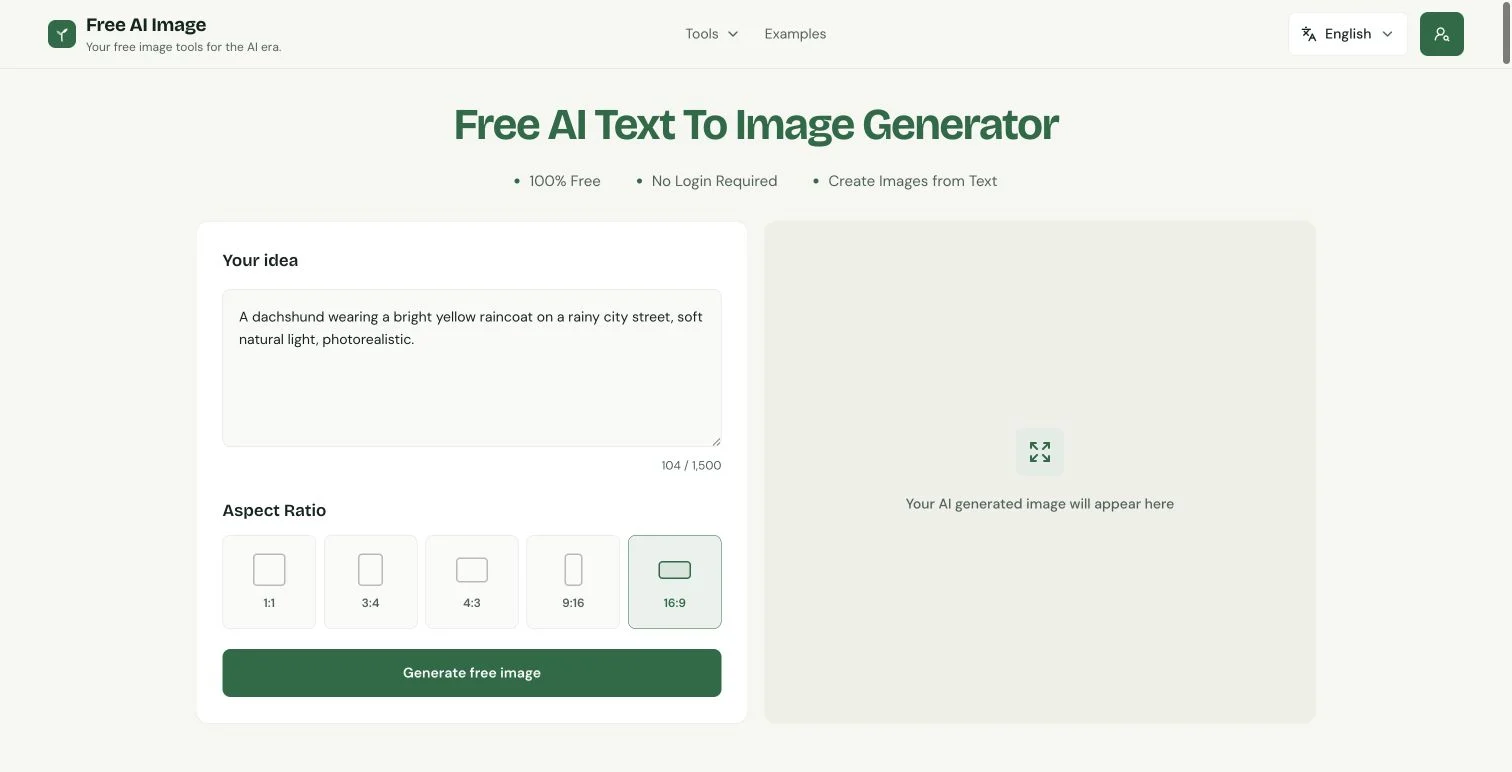
To edit a photo instead, upload a PNG, JPG, or WebP file (up to 10MB) and describe the change.
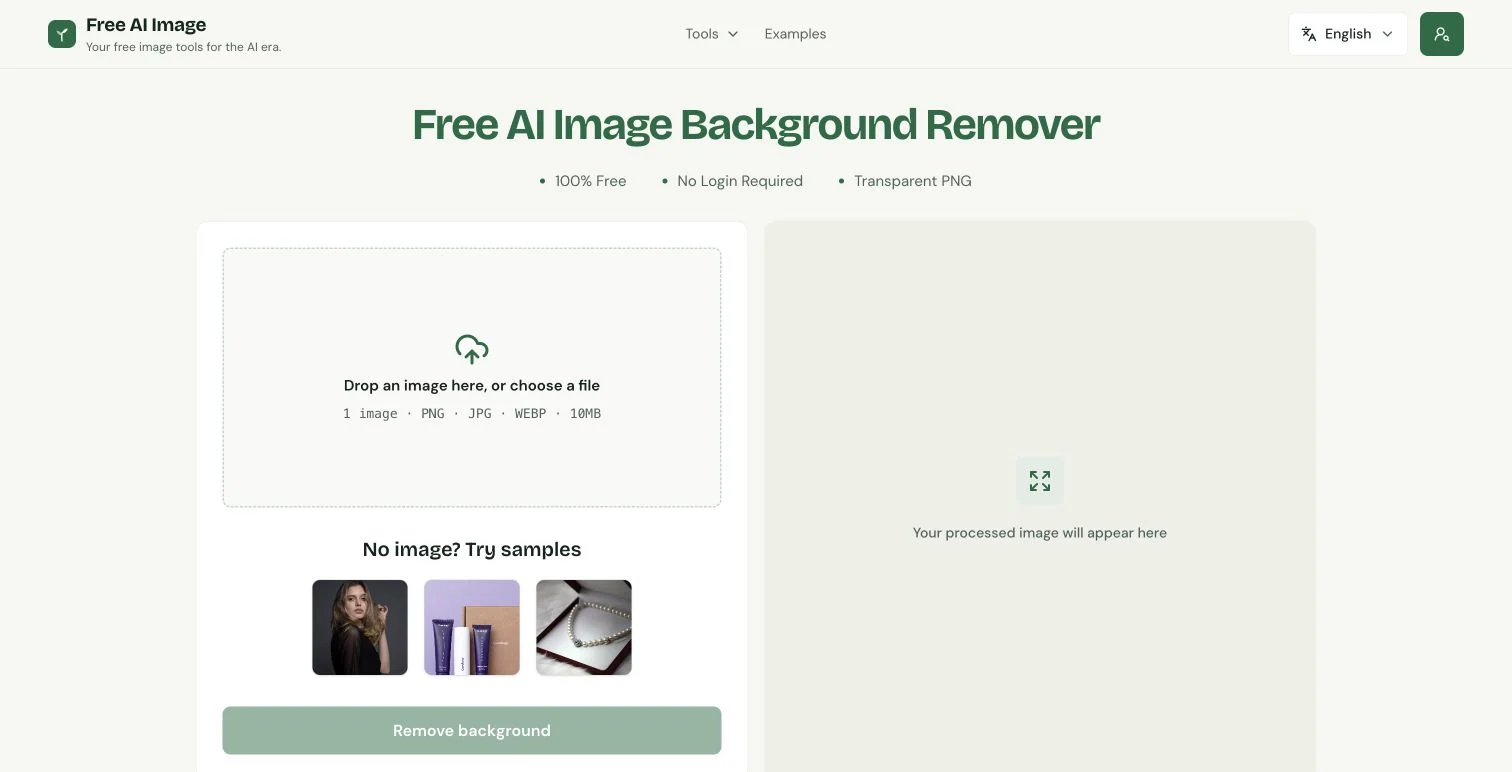
The site also includes one-click tools for the jobs that usually come right after generation: a background remover, an upscaler, an object remover, an image extender, and a resizer.
Where it falls short: the free tier runs on Z-Image Turbo for text-to-image and FLUX Klein 4B for photo edits, both tuned for speed rather than maximum detail. That’s the trade. It’s built for everyday images, a blog header, a quick mockup, a placeholder in a deck. When the image itself has to hold up to close inspection, Gemini and ChatGPT (below) go further.
Two smaller things. Each request returns one image, not a batch of variations. And normal use isn’t capped: the free model doesn’t spend credits, and the rate limit that exists is there to stop scripted abuse, not ordinary clicking.
- Sign-up: Not needed
- Free limit: No cap for normal use
- Watermark: None
- Commercial use on free plan: Yes
2. ChatGPT
Best for: editing images through conversation
ChatGPT’s image model is one of the strongest available right now, and free users get the same model, just with tighter limits.
What sets it apart is context. Because it works inside a chat, you can refine an image step by step: generate it, then say “make the raincoat red” or “move the dog to the left,” and it changes that detail while keeping the rest.
To start, open ChatGPT, sign in with a free account, and describe the image you want.
Tip: change one thing per message. Asking for three edits at once makes it more likely to redraw the whole image.
The limits: OpenAI doesn’t publish a free cap, and it moves with server load. In practice the free plan is a few images a day, at low priority. Generation is also slower than most tools here, and you get one image per request.
- Sign-up: Free account
- Free limit: Undisclosed, a few images a day
- Watermark: None
- Commercial use on free plan: Yes, you own the output
3. Google Gemini (Nano Banana 2)
Best for: realistic images and photo edits
Nano Banana 2 is Google’s image model, built into Gemini. For a free model, its realism is good, and it follows detailed prompts closely.
Sign in to Gemini with a Google account and describe your image.
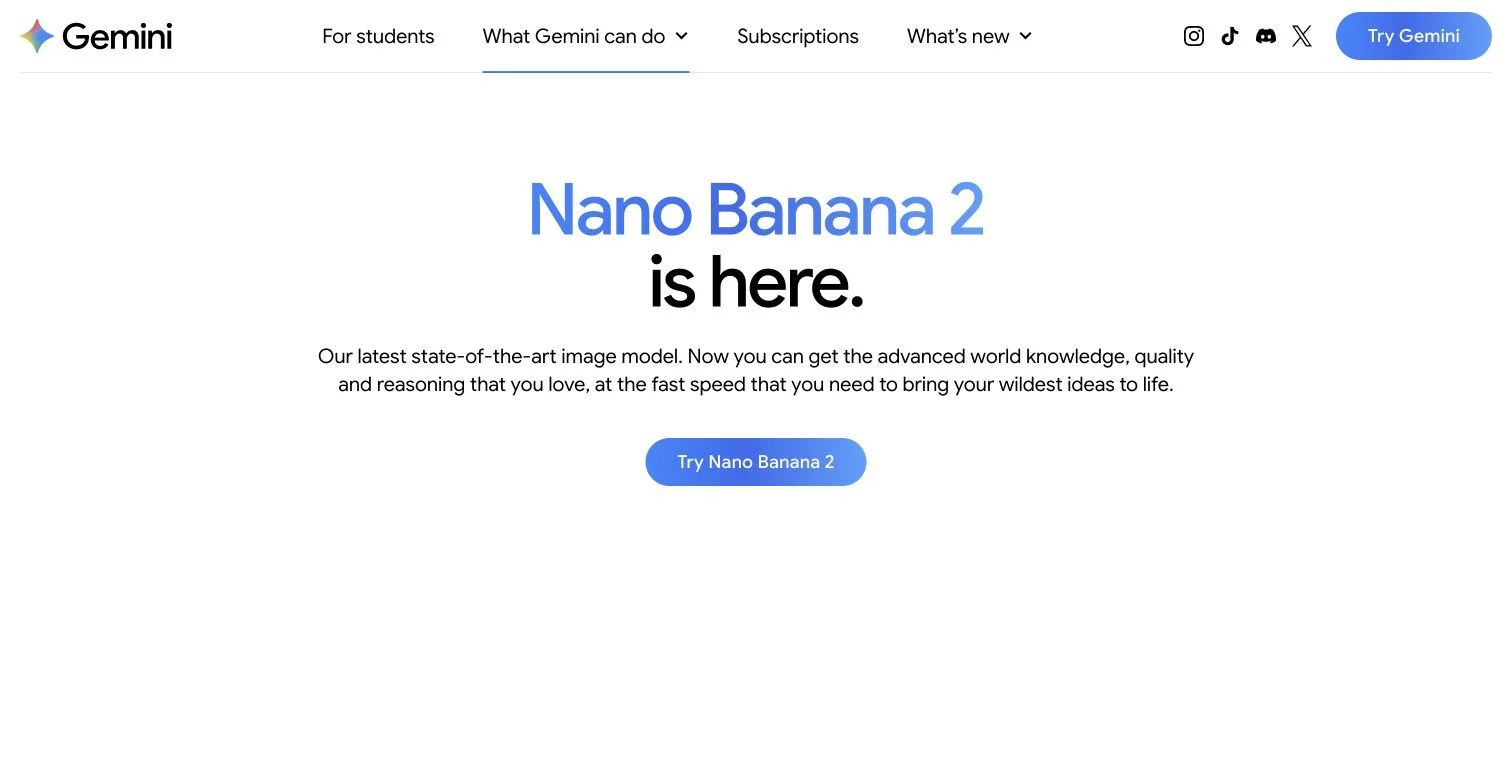
It’s especially strong at editing. Change one thing in a photo and everything you didn’t mention stays exactly as it was.
Tip: Gemini has almost no settings panel. Put format instructions right in the prompt, like “16:9, wide shot.”
The free plan refills every day, at around 20 images. The bigger catch is the watermark: Gemini stamps a visible one on everything it generates, which rules it out for anything you publish as-is.
- Sign-up: Free Google account
- Free limit: Refills daily, around 20 images
- Watermark: Yes, visible
- Commercial use on free plan: Yes, Google doesn’t claim ownership
4. Microsoft Bing Image Creator
Best for: comparing several models for free
Bing Image Creator puts several image models in one free interface, so you can run the same prompt through each and keep the best result.
Sign in to Bing Image Creator with a Microsoft account, pick a model (MAI-Image-1, DALL-E 3, or GPT-4o), and generate.
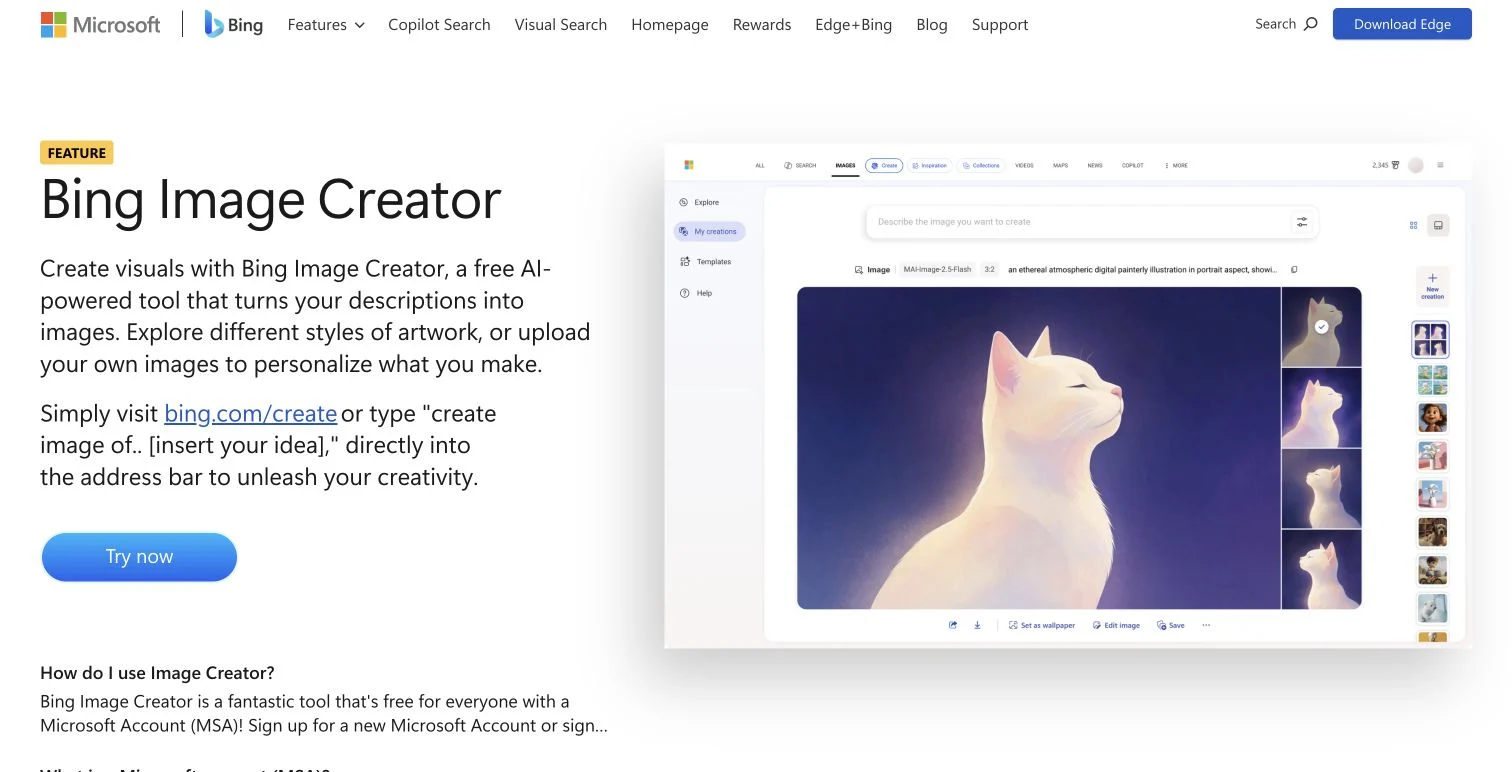
Speed is the trade-off. You get 15 fast generations a day, and after that it keeps working, just slower. There’s also a ceiling of 200 prompts in 24 hours, and edits count against it.
Its content filters are the strictest here. Editing is locked to one model too: upload an image and GPT-4o takes over automatically. And every image carries a visible watermark plus Content Credentials metadata.
- Sign-up: Free Microsoft account
- Free limit: Refills daily, 15 fast generations
- Watermark: Yes, visible
- Commercial use on free plan: Yes, but not exclusive
5. Ideogram
Best for: posters, thumbnails, and anything with words
Most AI image generators still mangle text. You ask for “OPEN LATE” and get “OPNE LAET.”
Ideogram is the exception. Its model is built to render readable text, which makes it the best free option when the words have to come out right.
Sign up for a free account at Ideogram, type your prompt, and put the exact words you want in quotes.
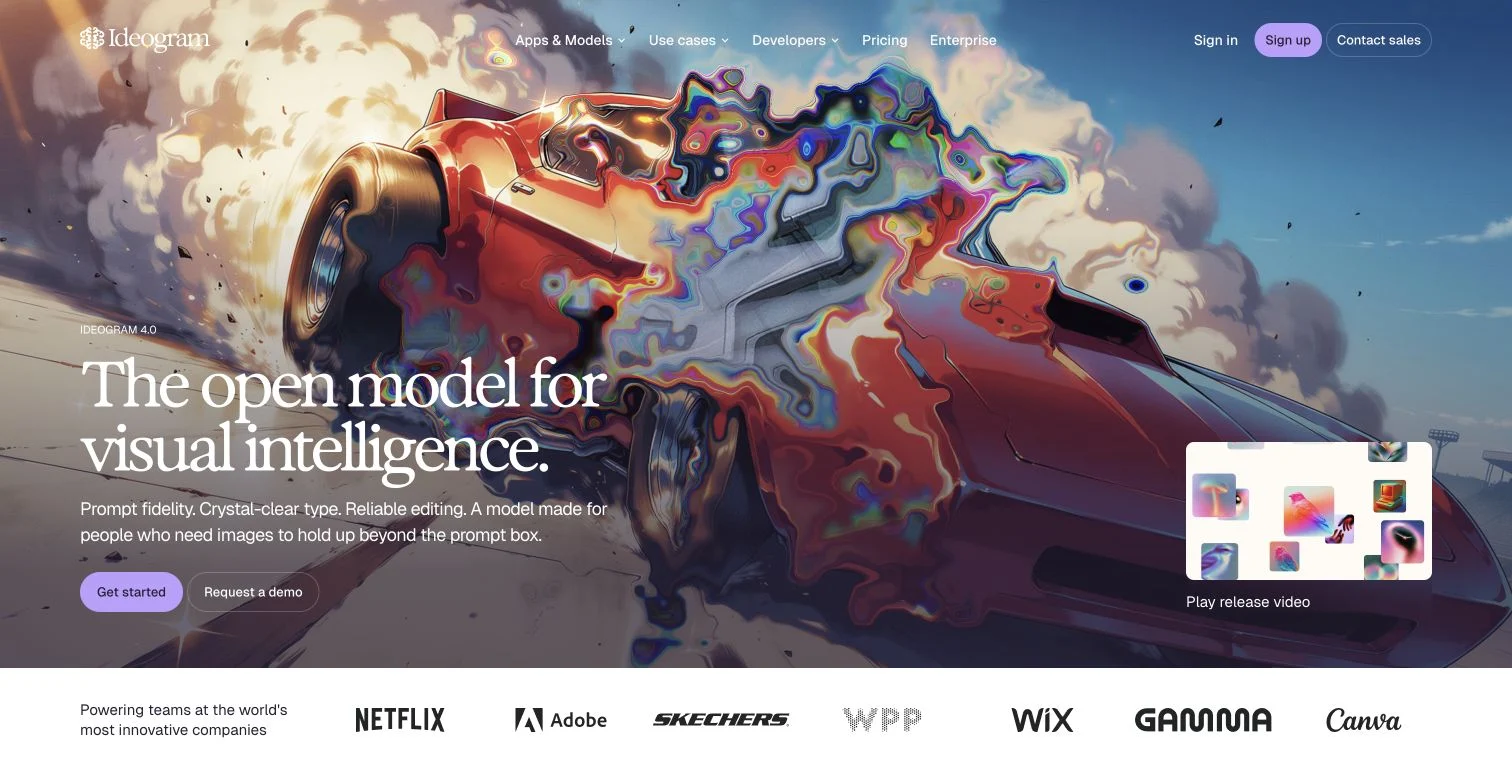
The free plan is limited, though. You get a dozen slow credits a day, you wait in a queue, and every image is public by default. That’s fine for a blog thumbnail, but not ideal for a client project.
- Sign-up: Free account
- Free limit: Refills daily, 12 slow credits
- Watermark: None
- Commercial use on free plan: Yes, but images are public
6. Recraft
Best for: logos, icons, and vector graphics
Recraft outputs real vector files (SVG). For logos and icons, that matters: a vector scales to any size without getting blurry.
Create a free account at Recraft, choose “Vector” as the image type before you write the prompt, and generate.
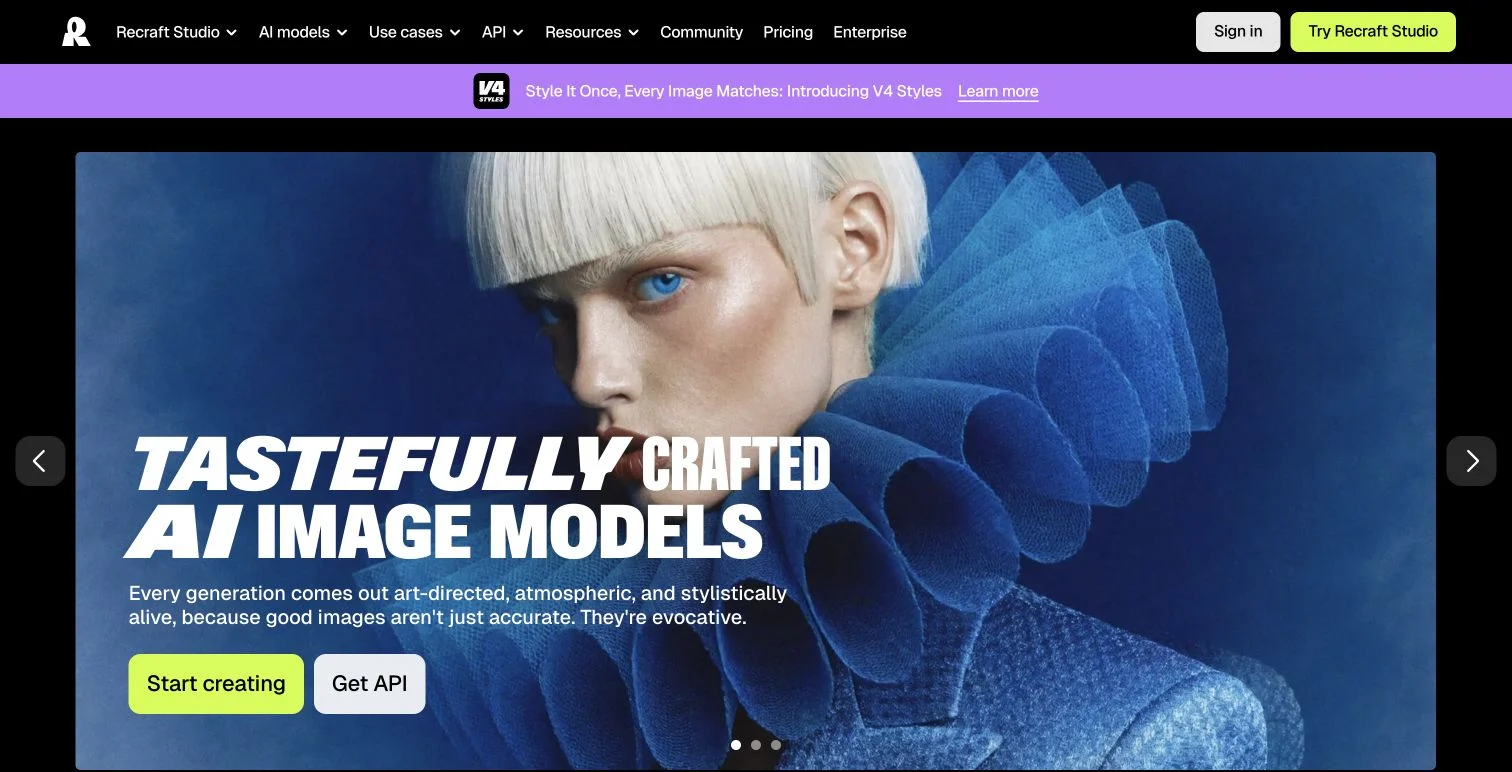
You get 30 credits a day, refilled whether you used them or not.
The catch is ownership. On the free plan Recraft keeps the rights to what you generate, your images land in a public gallery, and commercial use isn’t allowed. Use it for personal projects and prototypes, and upgrade before anything goes into a real brand.
- Sign-up: Free account
- Free limit: Refills daily, 30 credits
- Watermark: Yes
- Commercial use on free plan: No
7. Leonardo AI
Best for: fine control over models and settings
Leonardo gives you more control than anything else here: multiple models, style references, character consistency, and detailed settings for size and quality.
After signing up at Leonardo, open the Image tool, pick a model, set the dimensions, and generate.
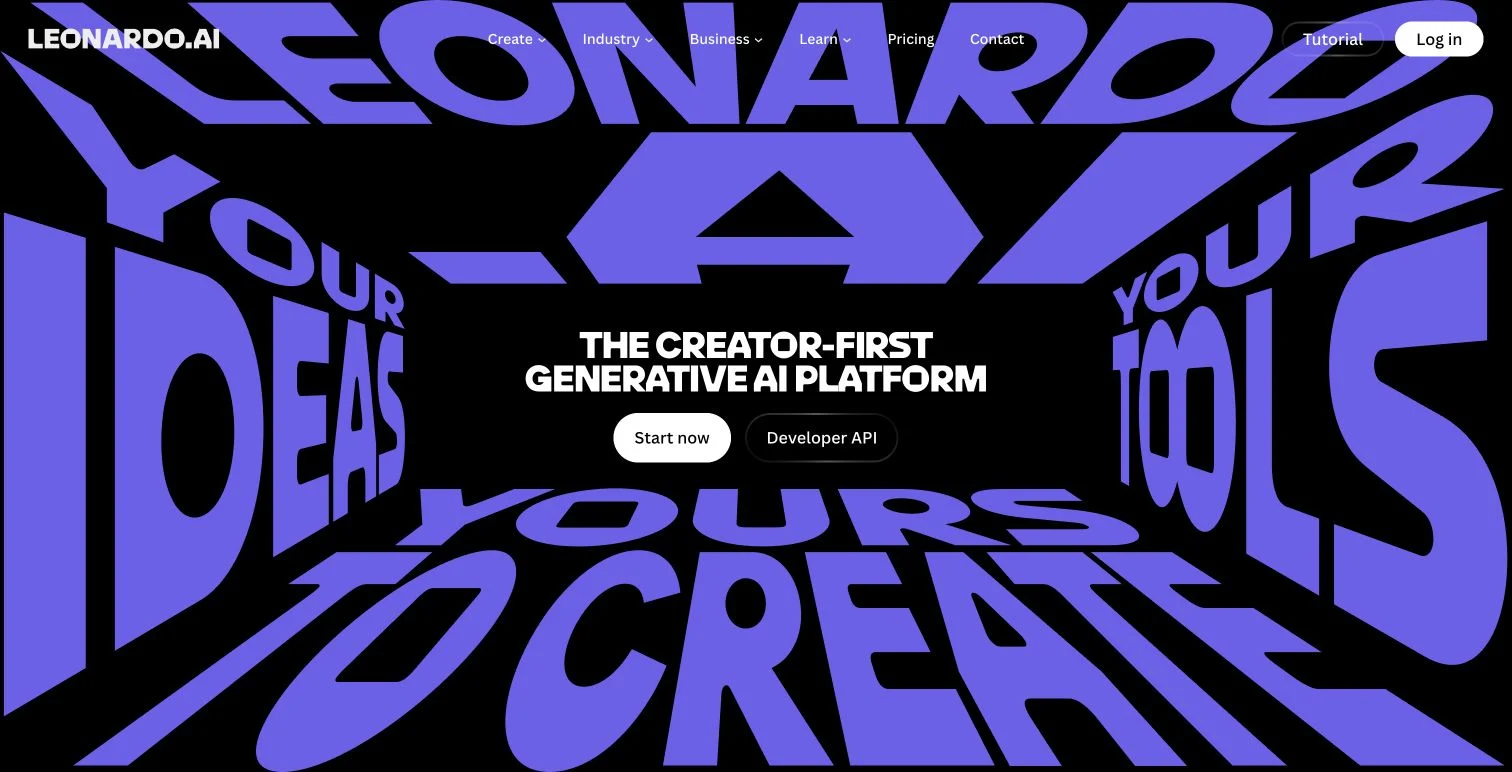
The free plan gives you 150 Fast Tokens a day, but premium models burn through them fast. In practice that’s a handful of images.
Tip: to stretch your tokens, test prompts on a cheaper model first, then switch to a premium model for the final image.
Like Recraft, the free tier is public: other people can see what you generate, and Leonardo keeps broader usage rights. It’s not the place for confidential work.
- Sign-up: Free account
- Free limit: Refills daily, 150 Fast Tokens
- Watermark: None
- Commercial use on free plan: No
8. Adobe Firefly
Best for: images you can use commercially without worrying
Adobe trains its own Firefly models on licensed and public-domain content, and markets them for commercial use. If your company has rules about where images come from, that matters more than a few points of image quality.
Sign in at Firefly and write your prompt. Generated images move into Adobe Express and Photoshop without a download step.
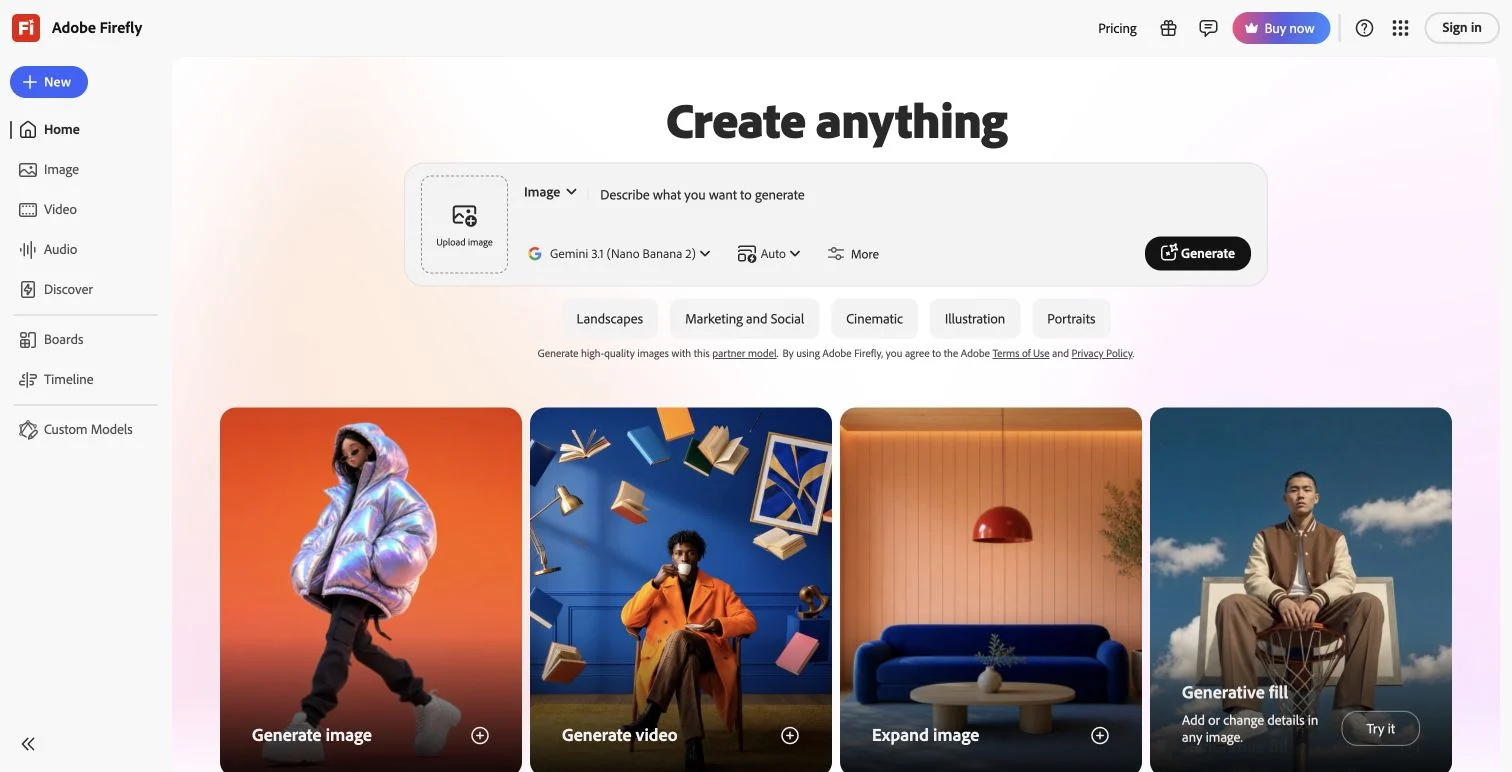
Tip: check which model is selected. Firefly also hosts partner models, and those carry different licensing terms than Adobe’s own.
The free plan is the strictest here, and it’s strict in an unusual way: you get 10 credits once, not 10 a day. A basic generation costs one credit, larger images cost more. When they’re gone, they’re gone.
- Sign-up: Free Adobe account
- Free limit: 10 credits, one-time
- Watermark: None
- Commercial use on free plan: Yes, on Adobe’s own models
9. Stable Diffusion (Running Locally)
Best for: unlimited, private generation
Stable Diffusion is an open-source image model. You can download it and run it on your own computer, which means no account, no daily limit, and no one else seeing your images.
Setup is the hard part. You install an interface such as ComfyUI, download a model, and launch it locally. The GitHub README for each interface covers the installation steps.
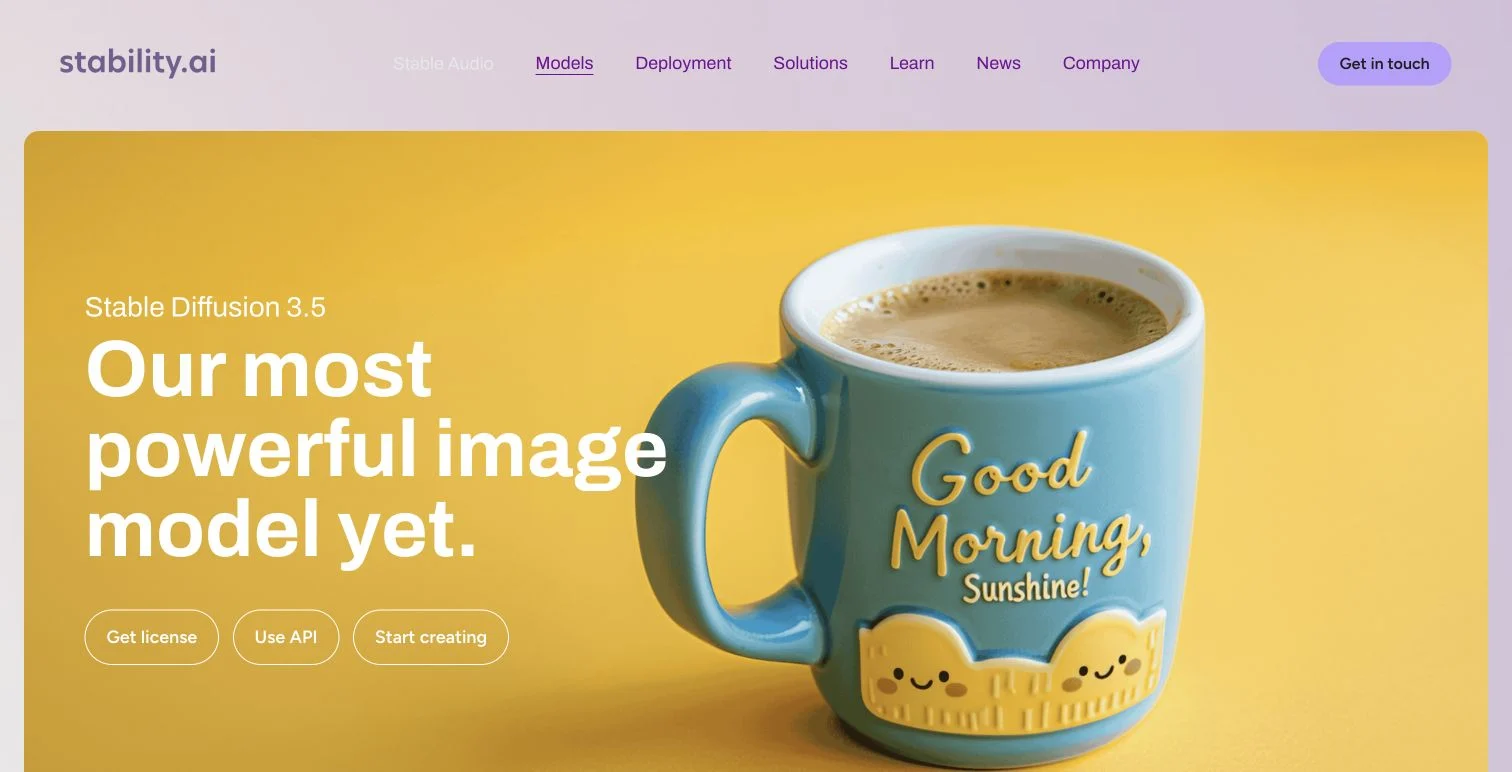
The main requirement is hardware: you’ll need a capable GPU.
Licensing depends on the model you download, so check its license before commercial use.
- Sign-up: Not needed
- Free limit: None (your hardware is the limit)
- Watermark: No
- Commercial use: Depends on the model license
10. Grok Imagine
Best for: a quota that resets in hours, not days
Every other online tool here makes you wait until tomorrow. Grok refills about 10 images every two hours, which is the difference between stopping work and taking a coffee break.
Open Grok, switch to image generation, and write your prompt.
xAI is clear about rights: you own what you generate and can use it commercially. The one condition is labeling. xAI asks that you mark content as created with Grok.
- Sign-up: Free account
- Free limit: About 10 images every 2 hours
- Watermark: None, but xAI asks you to label output
- Commercial use on free plan: Yes, with labeling
Side-by-Side Comparison
| Tool | Best for | Sign-up | Free limit | Watermark | Commercial use (free) |
|---|---|---|---|---|---|
| Free AI Image | Fast start, no account | No | No cap for normal use | None | Yes |
| ChatGPT | Editing by chat | Free account | Undisclosed, a few a day | None | Yes |
| Google Gemini | Realistic images | Google account | ~20 a day, refills | Visible | Yes |
| Bing Image Creator | Comparing models | Microsoft account | 15 fast a day, then slower | Visible | Yes, non-exclusive |
| Ideogram | Text in images | Free account | 12 slow credits a day | None | Yes, but public |
| Recraft | Vector graphics | Free account | 30 credits a day | Yes | No |
| Leonardo AI | Fine control | Free account | 150 tokens a day | None | No |
| Adobe Firefly | Commercially safe images | Free account | 10 credits, one-time | None | Yes |
| Stable Diffusion (local) | Unlimited, private | No | Unlimited | No | Depends on model |
| Grok Imagine | Fastest quota reset | Free account | ~10 every 2 hours | None | Yes, with labeling |
A note on the watermark column: some tools label images to mark them as AI-generated, others do it to nudge you toward a paid plan. Either way it’s the hardest thing on this table to work around.
How to Choose
Start with your constraints, not with which tool is “best.”
- You want one image and you’re not signing up for anything: Free AI Image.
- You need a lot of images in one sitting: Grok Imagine first, then Bing. Bing slows down instead of stopping.
- The image is going into paid work: skip Recraft and Leonardo. Their free plans don’t license commercial use.
- The work is confidential: skip Ideogram, Recraft, and Leonardo. Free-plan images on all three are public.
- A watermark would be a problem: skip Gemini, Bing, and Recraft.
- Your company asks where the training data came from: Adobe Firefly, on Adobe’s own models.
One more practical point: free limits reset on different schedules. Grok comes back in two hours, most others tomorrow, and Firefly never does. When one runs out, switching is usually faster than waiting.
Final Thoughts
No free plan here is generous in every direction. Every one of them gives something up: an account, a watermark, a public gallery, a quota that never refills. But between these 10, there’s one that gives up the thing you don’t care about.
If you want to see how little it takes to get started, try Free AI Image. No account, no credit card, nothing to install.